Submit ContentAdvertise With UsContact UsHomeJoin Our Social Side
Short Sories Tall Tales
My Place
Humor Me
Cook Stove
Western Movies
Western Movies
Cowboy Poetry
eCards
The Bunkhouse
The Authors Herald
Links
Interviews


EXPERIENCED WRITERS…AND GREENHORNS TOO!

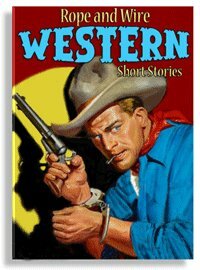
ROPE AND WIRE
Is currently seeking articles with the following topics to publish on our website:

Western Short Stories

Country/Western Lifestyles

Farm and Ranch Life

Cowboy Poetry

Country Recipes

Country Humor

Please see our submissions page for guidelines on submitting your articles.

THANK YOU for your support.


Short Stories & Tall Tales


BUFFALO BONES
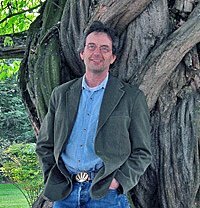
Charlie Steel

Standing on the porch, Frank Grimes looked over the land one last time. Now it belonged to the bank. He had worked hard all his life and with one cruel act of nature, the crops failed and income was gone. With no money, he couldn’t buy seed, he had no credit at the store, and couldn’t pay the mortgage. The farm was lost, a farm he had worked with his father before he passed on. It was hard to walk away from a lifetime of work and not one penny to show for it.

Sadly, Frank looked over the fields. He stepped off the porch. A small pack containing everything he owned hung on his shoulders. Now the milk cow, the draft horses, the wagon, and all the tools and farm equipment belonged to the bank. The farm house wasn’t much. It was sturdy and the roof didn’t leak, but it wouldn’t be missed. It was the hundred sixty acres of land, the large barn, the fences marking the boundaries, the sturdy oaks and walnuts he and his father planted, that would be hard to leave.

Frank Grimes did not smile or greet the banker. He left the key in the lock of the front door. It was symbolic; it was a key he and his father had never used. Besides, how could you lock up a barn, a farm, the land? All Frank could do was try to close his mind to the hopes, dreams, and memories. The farm had been his life. It was in his blood, and he would never forget, no matter where he went or how long he lived.

“I’m sorry, Mr. Grimes,” said the banker. “Good luck to you, sir.”

Frank did not shake the extended hand, nor did he respond. He turned his back on the man and began walking down the shaded lane. He passed under the walnut trees he and his father planted more than twenty years before. Frank walked through the land he so dearly loved for the last time. Turning at the gate onto the road, he started south. He was a grown man of thirty-two with five dollars and change. He didn’t even have a horse or a mule to ride. No plan, no destination---the future unknown.

The wind began to blow. It would be a blustery fall and a hard cold winter. There was natural instinct about the weather in Frank Grimes. The critters started storing early; birds gathered sooner for migration, and fur on the animals was thicker. Those were not good signs.


* * *


It takes a man a long time to walk from Ohio to the Mississippi. It took Frank Grimes months. He worked his way along, cutting wood, mowing hay, harvesting crops, cleaning out saloons, performing whatever work he could find. Sometimes it was for food and shelter, and sometimes he got paid. He was a big strapping man and people liked to hire hard workers. Frank knew how to work. His hands were calloused and his muscles strong. He wasn’t afraid of using his brawn.

On the long walk he had a lot of time to think. He had been happy on the farm. It was a place of permanence, it was meant to be a place he would live out his entire life. Now, walking along with only a pack on his back, he learned how temporary, how transient everything could be. He was a man alone facing the world.

He had gone to church in Ohio. There were Saturday night dances, church socials, and picnics. He had searched but did not find the right girl. Frank did not socialize well and had a fierce temper when riled. Perhaps that was why he never married.

In St. Louis, there were jobs to be had, but Frank Grimes did not take orders well. While clerking in a general store, he easily handled and filled orders. It was nothing to follow written lists and stack the goods on the loading dock. He even helped customers load their wagons with supplies. But when the owner yelled at him without good cause, Frank rewarded him with a punch in the nose. He fired Frank and refused to pay him. Again Frank hit him. The man ran for the town marshal and Frank headed west.

At a ranch far from the city, he hired on as a stable hand to shovel and clean the stalls and haul away manure. But when the cowboys came to make fun of the new hand, they found he did not take to ‘funning’. He broke the nose of one tormenter. When his partners came to help, Frank fought four of the riders at once. The ranch owner heard the ruckus and discovered five cowhands with various broken bones. Frank was once again without a job.

“What I need,” said Frank out loud. “Is a job where I can work for myself.”

A heavily loaded wagon ground its steel tires over the hard adobe road. As it neared Frank, the wagon slowed and stopped.

“Fer piece to town,” said the driver. “Could you afford two bits for the ride in?”

The bearded dirty man was smoking a pipe and a white cloud came out of his mouth and curled around his head. Frank noted that the frayed man looked like he could use the money.

“How about ten cents?”

“Done!” The driver smiled a broad grin; a hole appeared and teeth were missing.

Frank went around the wagon and noted a huge pile of bones on the back. He studied them. They were not cow bones, although they looked similar. The bleached skulls and horns revealed that they were the remains of buffalo. Frank put a foot to a hub, climbed up, and sat in the seat next to the driver. He waited for the man to rein the horses and noticed a right palm turned upwards. Finding his wallet, Frank produced a coin and placed it in the man’s hand. Again the whiskers parted, a toothless grin exposed. A thick puff of smoke rose and the raggedy driver slapped leather.

The old man was burned brown by the sun. His exposed skin on face and neck were etched with deep wrinkles. He wore patched clothes any other human would have tossed for rags. There wasn’t one spot on his pants, shirt, or jacket that did not contain a crudely sewed patch. His hat was bent, holey, and black with grime.

The bone business, thought Frank, must not pay well.

“My name is Frank Grimes,” the hitchhiker said.

“Folks call me Smiley,” said the old man.

There wasn’t much to the driver except patched clothes, skin, and bones. Frank leaned against the back rest. A protruding horn stabbed at him and he was forced to set up.

“What do you do with all these bones?” asked Frank.

“Sell them,” said Smiley.

“For what?”

“They’ll be ground up for fertilizer,” Smiley said, removing his pipe. “I’m told they’s rich in phosphorescence, or some such thing.”

“You mean phosphorous?”

“That’s it.”

Smiley finished his pipe, tapped the bowl on the edge of his seat, and hid it away in his frayed jacket.

“Frank,” said Smiley, clearing his throat and getting primed. “There’s a story to them thar buffalo and to them bones. Now these here can also be made into bone charcoal. Don’t know zackly what that is, but somethin to do with making sugar. Some of these on this here wagon could be made into buttons, and used fer knife handles and such.”

“I see,” said Frank, trying to get comfortable and avoid the sharp horn.

“Now, did you know that fer them Injuns, the buffalo was a regular walking mercantile?”

Frank didn’t answer. He was tired.

“Huh?” asked Smiley impatiently.

“No, I didn’t,” responded Frank.

“Well, they was!” argued the old man.

The heavily loaded wagon creaked along. The rutted road didn’t make pulling very easy for the two big draft horses. One of the hubs needed greasing and squeaked with each revolution. Frank finally found a comfortable position and he began to drift off.

“Now what do you suppose them Injuns could get out of a buffalo?”

Again silence.

“Hey! Are you listenin, Mister?”

“Yeah,” mumbled Frank. “I’m listening.”

“Well, sir, besides food, they used the skins. Can make purty darn near anythin from the skins. Wigwams, blankets, clothes, shields. Why once I shot an Injun and you know that buffalo shield durn near stopped a bullet? I had to go and shoot him again.”

Frank let out a snore.

“Mister!” hollered Smiley. “If’n you’s ridin in this here wagon, and I’s got somthin important to say, I expect a feller to be po-lite and listen.”

Frank sighed and sat up.

“I’m listening.”

“Well, them Injuns can make durn near anythin out of a buffalo. Yes sir, now that them buffalo are shot off, them Injuns are all gonna starve. Tweren’t no calvary that done em in. No siree! It was the killin of them buffalo.”

Smiley rested the reins in his lap and grasped his pipe, filled it with tobacco from a leather pouch he produced, and lit a lucifer. Smoke billowed and Smiley smiled, and continued talking. Pipe in mouth, reins in hand, the horses pulled and plodded along, and the wheel squeaked.

“Yes siree!” said Smiley. “Them Injuns can make pots fer cookin from green hides, use the bones for all kinds of tools. This here tobaccy pouch twas sewn with an Indian bone needle! They make scrapers, parts of bows, spoons, cups, skull crushing weapons, sleds, all sorts of things from them bones. They use bladders to fetch water, hair for ropes, and buffalo chips for fire.”

The wagon creaked along and Smiley kept talking.

“Are you listenin, Mister?” asked Smiley, giving Frank a nudge with a bony elbow.

“Yeah, I am,” said Frank.

“Well, I lived with them plains Injuns. Knew them all. The Sioux, the Arapaho, the Cheyenne, thems I liked best. Didn’t have no truck with them Kiowas. Commanche’s they’s the worst. Exceptin, maybe an Apache. Take your hair, everyone of them would, if’n they didn’t like yeah. Was a time I was a strappin handsome young man and them Cheyenne took favor with me. Made me blood brother. I used a Hawkins back in them old days and could shoot an ear offin a rabbit---while running!”

The wagon kept on rolling and creaking, the horses hooves thudded, the axle screeched, and the trace chains rattled over rough and uneven ground.

“Smiley?” the rider asked. “When is the last time you greased that wheel?”

The old man just looked at Frank, drew on the reins, and stopped the wagon.

“Well now, pardner,” said Smiley. “If’n you wants to fix it. The grease is in that there box behind you. And the tools for anything else you got a hankering to fix.”

Frank sighed and tried to lift the lid on the tool box. He had to push some of the heavy bones back that leaned on the top. He finally got it up. Finding what he needed, Frank took the grease and tool for the hub and greased the offending wheel, then wiped his hands in the grass and got aboard. Smiley slapped the reins and the wagon started. The squeak in the wheel was gone.

“Mighty obliged,” said Smiley, and he smiled.

Smiley, just plain talked out, rode on in silence while Frank adjusted his seat and found a spot comfortable enough to let him sleep. Near St. Louis they came up on a boy with a carpetbag walking along the dirt road. He heard the wagon and horses and stepped off to the side. Old Smiley pulled on the reins and brought the wagon to a stop.

“Hey, boy!” called Smiley. “You be needin a ride?”

Frank awoke and sat up. The boy held onto his carpetbag like it was the only thing in the world he owned. He appeared to be about ten and he looked scared.

“Mister,” said the lad. “I’m walking to St. Louis.”

“What I asked boy, is would you be needin a ride? Won’t cost you nothin.”

“Cost me ten cents,” mumbled Frank.

“I don’t charge young people!” growled Smiley. “What kind of hombre you take me fer?”

The boy came to the front wagon wheel on Frank’s side. He handed up his bag. Frank took it and placed it at his feet. The youth climbed up. Frank scooted over and the boy sat on the wagon seat. He was small and didn’t take much room.

“Mighty obliged,” said the youngster, showing his manners.

“Boy, what’s waiting in St. Louis?” asked the old man slapping reins and the wagon moved forward.

“Don’t rightly know,” said the lad. “I’ll be looking for a job.”

“How old are you?” asked Smiley.

“I’ll be twelve this July.”

“What’s your name?”

“My folks called me Kit.”

“Well, Kit,” asked the old man. “Somethin happen to yer folks?”

“They got sick. Half the town took sick. Even the doc died.”

“Cholera?”

“Don’t know. Folks just called it the fever. Nearly everybodys gone.”

“No one offered to take you in?” asked Smiley. “Relatives or such?”

“Ma and Pa’s folks are back east. I was born out here. No kinfolk left after my folks and little sister died.”

“Sorry, son,” said Smiley in a uniquely conciliatory tone. “Suppose I told you I know of a place that may take you in, give you schoolin, housin, and feed you for free?”

“What kind of place, Mister?” asked the boy in a trembling voice.

“No need to be skeered,” said Smiley. “I know these folks. Good place it is, or I wouldn’t tell ya about it.”

“Mister, the sheriff wanted me to work for the blacksmith. Said I needed to be ‘placed’. I ran away. That Smitty was mean.”

“Whoa,” said Smiley, pulling on the reins.

He stopped the wagon, bent forward and looked at the boy.

“Now listen here, lad,” said Smiley. “I was raised an orphan back east. It was a bad place and I ran the first chance I got. I traveled all over this here country. From up in Sioux land down to Texas and I met every kind of folk—some good, some bad. Now some people say the Injuns was a bad lot, but I’m here to tell you, people is people and you got to learn to assay em, and know which ones you can trust. I know of this here place that will take good care of ya. I know, cause from time to time I took interest in how they was treaten the lads.”

“Mister!” said the boy, his eyes widening in alarm. “I’m not going to no orphanage!”

“Boy!” said Smiley. “Listen up. If’n you roam the streets of St. Louis, you’ll starve. From starvin comes stealing. Them coppers will catch you and toss you in a home for delinquents. And, boy, you don’t want to be locked up in one of them places. What I have in mind is a place run by the Sisters of St. Joseph of Carondelet. It’s a good place, you’ll like it.”

“You mean nuns? I’m not Catholic, Mister.”

“Don’t make no mind to them what you are. You think on it awhile.”

Smiley slapped the reins and the wagon started. Frank eyed the old man with amazement. Not in a hundred years would he have guessed this old timer was anything but a poor weak-minded fool with a lot of windies to tell. Frank began to make a new assessment of the old man.

The boy was tired. He eventually nodded his head and fell asleep. Frank, too, began to doze off. When he awoke, the lad’s head was leaning against his arm. The wagon stopped in front of a building. There was a sign, St. Joseph’s Home for Boys. Smiley climbed down and signaled to one of the sisters standing on the front step. They talked but Frank couldn’t make out the words. When they finished, the nun hurried away. The boy beside Frank continued to sleep. Within a few minutes the nun returned with several others.

“Mister Smiley,” said the sister in charge. “We are pleased to see you. I am told you have brought us another boy.”

It was incongruous to Frank to see the old man be spoken to with such respect. From a money belt under his shirt, Smiley took gold and silver coins, and placed them in the nun’s hand. Frank was shocked. He would have bet his life that this old bone gatherer didn’t have a cent to his name.

“I know,” Frank heard Smiley say. “You’ll take good care of him. He lost his folks and he’s in need.”

Each of the nuns shook old Smiley’s hand.

“Young man,” called one of the sisters, reaching up and patting the youth’s arm.

Kit awoke in alarm and clutched his carpetbag.

“No need to be afraid,” said the sister. “Welcome to St. Josephs.”

Frank watched the nuns coax the boy off the wagon. They spoke gently and guided him up the steps into the building. Smiley looked on and clasped his dry wrinkly old hands together. When the boy was out of sight, Smiley climbed back up on the wagon.

The old man got the makings, stuffed his pipe, and lit it in a sulfurous stink. Pipe in mouth, he grabbed the reins, and slapped them. The horses leaned into their leather collars, and the wagon moved forward.

“Frank,” said Smiley. “You mention this to anyone and I’ll cut out yer gizzard.”

They headed to the train yard.

“Now where was I?” Smiley asked, and paused while he looked at his rider. “You listenin, Frank?”

“Yeah.”

“Well, about them buffalo. You shoot one for them Injuns in the old days, and they could make a general store out of a carcass. Yes siree! They could make pipes and fish hooks and what-nots from pert near any part of the animal. Whys, they even made glue from the hoofs. They made all kinds of doodads.”

The wheels turned and Smiley kept on talking.

“Are you still listenin, Frank?”

Frank sighed, gave up relaxing, and sat up straighter. The wagon came to the bone piles alongside the railroad tracks. There were mountains of bleached bones. Frank pulled the wagon up to the scales. After weighing, they emptied the wagon by lifting and tossing bones onto the large mounds. Smiley helped haphazardly and smiled at the strong easy movements of his helper. When the work was completed, Smiley got a piece of paper from the yardman. They drove to the railroad office and he went inside. When he came out, he had a satisfied grin.

“Frank,” he said. “You do good work. You hook up with me, pretend to listen once in a while to my palaverin, and I’ll pay yeah what you’re worth. I’m gettin too old to do this alone.”

“How much?” asked Frank.

“Depends,” said Smiley. “But you’ll get what’s coming to yeah.”

Smiley held out a hand. Frank put out his and a five dollar gold piece dropped into it.

“I figur,” said Smiley. “There’s about forty to sixty million carcass bones out there. It’s a cash crop to whoever has gumption to pick em up and haul em to the railroad, eight to nine dollars a ton further west and here in St. Louis, eighteen dollars. Farmers, ranchers, Injuns, all sorts of folks with a wagon, who got the time, haul in bones. Railroad don’t care who it is, they pay the same. You listenin, Frank?”

“Yes, I am.”

“Well, I figure it’ll take years to gather up all them bones. They’re scattered clean from Canada all the way down to Texas. A professor feller I met up with once calculated forty million dollars worth. That might be stretching it some, but suppose you and me have at it? Work hard, earn money, no one to yell at us, or tell us what to do. We got God’s own open prairie to look at, and no one place is ever the same. How about it, Frank?”

The old man put out a long skinny arm and a wrinkled brown hand. Frank took it, squeezed just enough, and smiled back at cloudy blue eyes.

Send this story to a friend
SocialTwist Tell-a-Friend
 
Copyright © 2009 Rope And Wire. All Rights Reserved.
Site Design: DIGI Studios